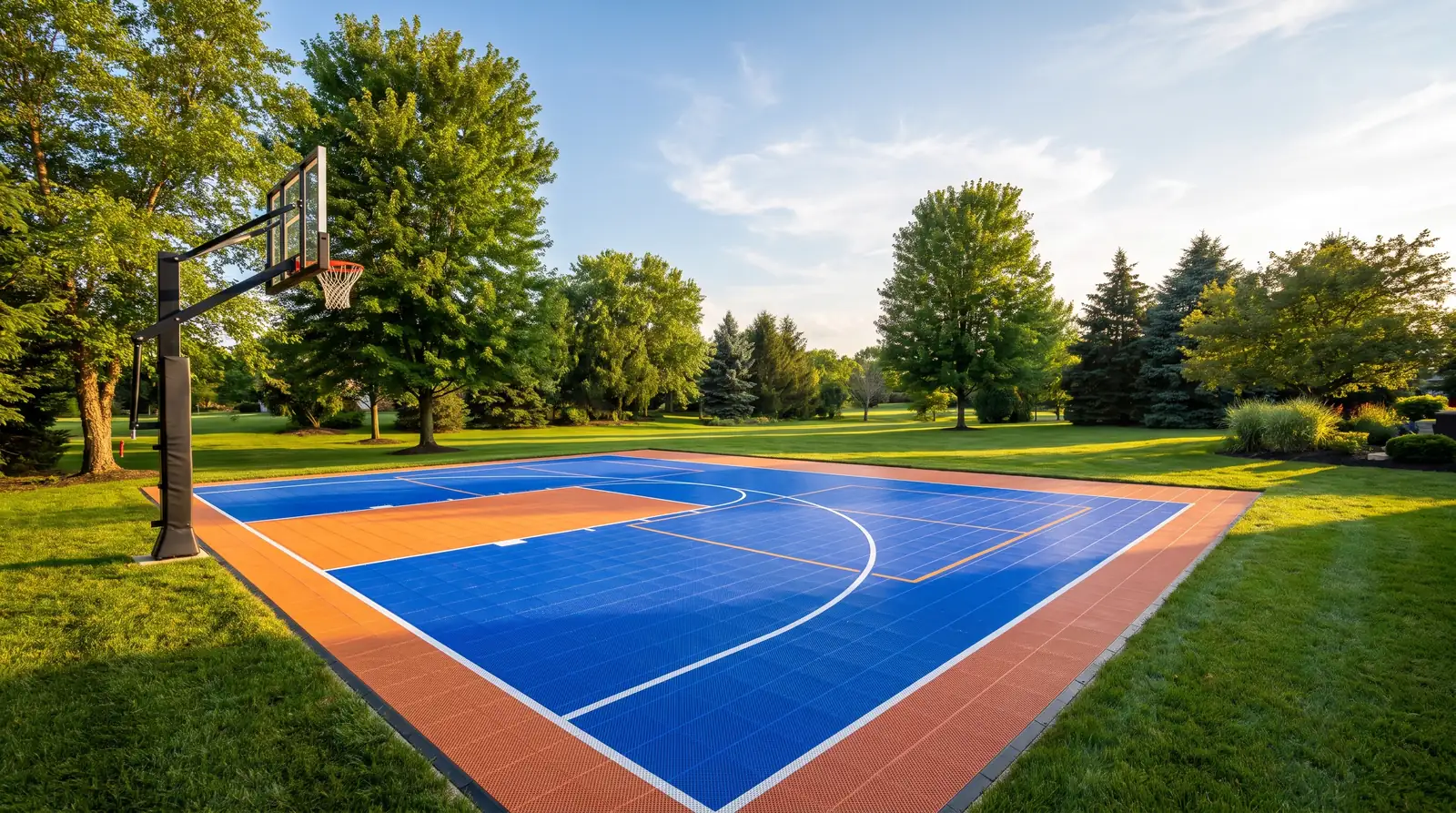
What Drives Sport Court Cost? A Guide for Every Sport
Sport court cost depends on your yard, not on a national average. Instead of publishing ranges that never match your yard, here's the honest breakdown of what actually moves a backyard sport court cost - and how Game Tile Courts™ delivers a firm, all-in quote you can plan around.
Pick Your Sport: Basketball, Pickleball or Multi-Sport Cost Guides
Each sport has its own guide that walks through its sizes and its cost drivers in detail:
- Backyard basketball court cost: from a shooting area to a full court
- Backyard pickleball court cost: single or dual courts, the base and noise planning
- Multi sport court cost: which sports share one surface and what each size unlocks
The GTC All-in Quote: What the Number Includes
Every Game Tile Courts™ quote is all-in - tiles, ramps, corners, freight, logo, and a free CAD layout in one number, with no line-item surprises. We don't quote in ranges, we quote in one firm number tailored to your project. That is the only sport court price we publish, because it is the only one that describes your court. When you are ready, get your all-in quote.
What Drives Sport Court Cost
Five factors move the outdoor sport court cost on any backyard project:
- Tile line - multi-sport value, cushioned, or premium tournament-grade
- Court size - 30 × 50, 40 × 60, 40 × 78, or fully custom
- Base condition - existing concrete or asphalt pad vs. new base work
- Install type - DIY (Do it Yourself) tile install vs. professional install
- Accessories - hoop system, lighting, fencing, rebounders
Size is the most predictable lever, because every additional square foot adds tile, edging and freight. The most popular size is 40 × 60 ft, and our basketball cost guide walks through it.
Sport Court Tiles Cost vs Base and Installation Cost
It helps to split the cost to build sport court projects into three parts, because they come from different places:
- Sport court tiles cost: set by the tile line and the court size, and covered by the GTC all-in quote along with ramps, corners, freight and your CAD layout.
- Base cost: zero if your existing pad is sound. New concrete, asphalt or gravel base work is a separate contract with a licensed local contractor. Game Tile Courts™ does not pour bases.
- Sport court installation cost: zero labor if you lay the tile yourself, or a professional install through our certified installer network.
So the cost to build a sport court on an existing slab is mostly tile, while a court on bare ground adds a base contract on top.
DIY vs. Professional Installation
Modular tile is DIY-friendly - snap-lock installation, no adhesive, and a weekend of work with two people. Skipping install labor is the biggest single lever you control. Adding professional installation gives you game line layout and marking, a post-install inspection and walkthrough, and a turnkey handoff through our certified installer network. Your quote will show both options side-by-side.
Base Condition Matters
An existing flat concrete or asphalt pad is the ideal - no additional base cost. If you don't have a pad, your local contractor can install a gravel, asphalt, or new concrete base. Base work is priced separately by that contractor; the GTC quote covers everything above the base.
Indoor Sport Court Cost: What Changes Indoors
Indoor sport court cost follows the same drivers, with two differences. The floor is usually an existing concrete slab, which our indoor installation guide asks to be flat within 1/8 inch per 10 ft with a moisture barrier. And the tile line changes: fully conditioned rooms can use an indoor-only line, while an unheated garage or outbuilding needs an indoor-and-outdoor line.
Check ceiling height before anything else. We recommend a minimum of 16 ft for basketball and 12 ft for pickleball or tennis. Our indoor basketball court page covers the indoor tile lines.
Financing for Qualified Buyers
You don't have to pay for the whole court at once. Monthly payment plans are available for qualified buyers, subject to approval, with terms from 12 to 60 months. See financing for qualified buyers for how it works.
Frequently Asked Questions
Q: How much does it cost to build a sport court?
A: It depends on five things: tile line, court size, base condition, install type and accessories. We do not publish ranges because they never match a real yard. Send your measurements and we return one firm all-in number with a free CAD layout.
Q: What goes into a sport court backyard cost estimate?
A: Your GTC quote covers tiles, ramps, corners, freight, logo and a free CAD layout in one number. Base work, if you need it, is quoted separately by a licensed local contractor.
Q: Does DIY installation lower sport court cost?
A: Yes. Laying the tile yourself removes install labor, which is the biggest single lever you control. It does not change the base cost, and it does not shorten a project that needs a new base.
Q: Is the base included in the sport court price?
A: No. The GTC all-in quote covers everything above the base. An existing sound concrete or asphalt pad adds nothing, and new base work is priced separately by a licensed local contractor.
Q: Does a sport court add value to my home?
A: Yes. A finished sport court typically adds 2-5% to residential property value and is a strong selling point for family buyers.
Q: Is sport tile cheaper than asphalt?
A: Over a 10-15 year horizon, yes. Tile requires no sealing or repainting, so lifetime cost of ownership is significantly lower.
Q: Can I finance a sport court?
A: Yes, for qualified buyers. Game Tile Courts™ offers Affirm financing with flexible monthly payment plans, subject to approval, and can structure phased installs. See our Financing page for details.