
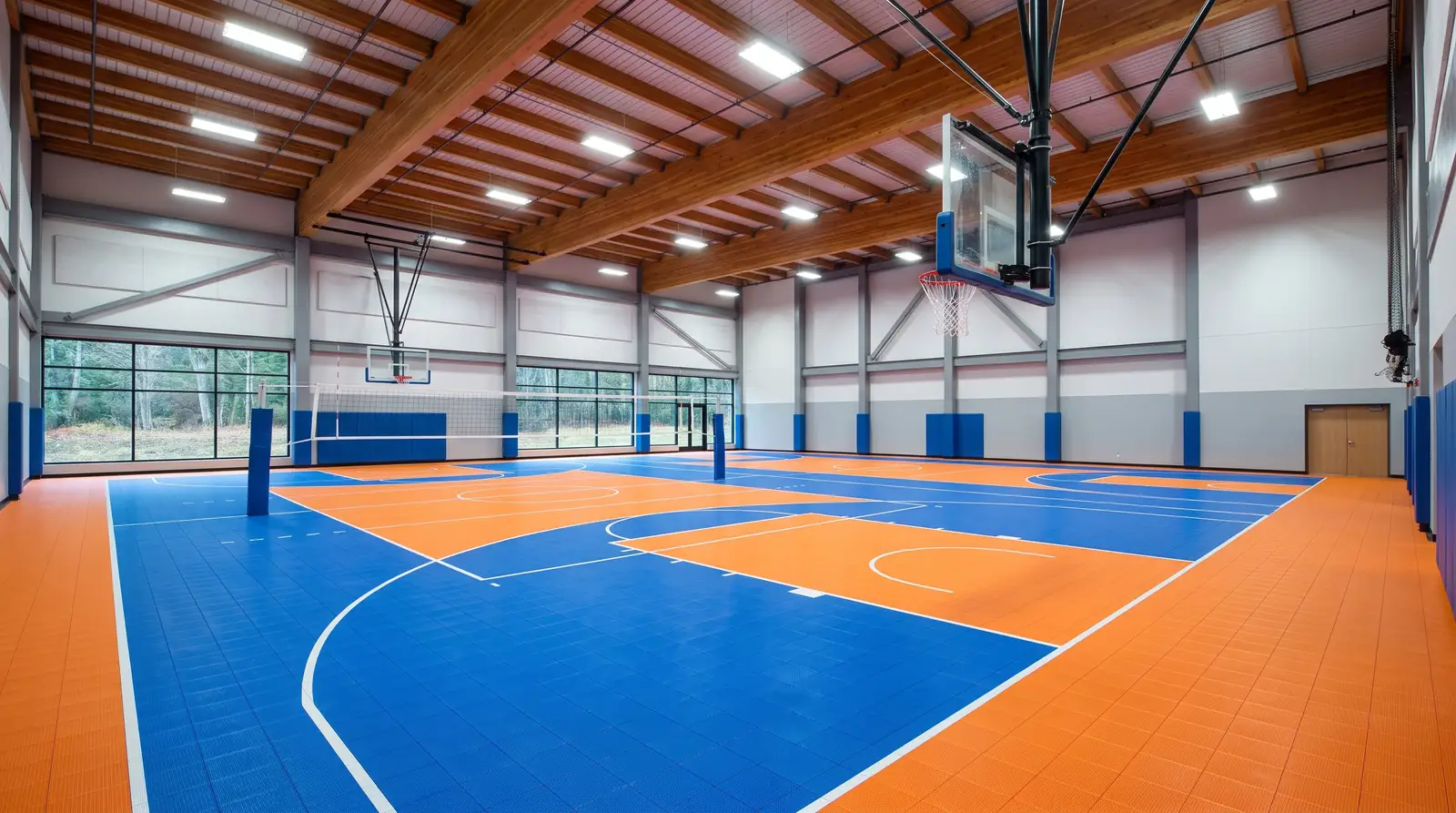
Indoor Basketball Courts for Homes and Facilities
An indoor basketball court gives you a place to play every day of the year, whatever the weather. Game Tile Courts supplies the surface: modular indoor sport court tiles in wood-look and cushioned lines, custom court lines and logos, and a free CAD layout with every quote.
Moving a basketball court indoors changes almost everything about the floor you need. There is no rain to drain, no sun to fade the color, and the room is usually shared with a family, a home gym or a busy facility schedule. The priorities shift to the look of the floor, how it feels underfoot, how quiet it is and how easy it is to keep clean.
Here is what we do and what we do not. We supply modular court tiles, court kits and accessories, and we work with certified installers. We do not handle indoor basketball court construction such as framing, pouring a slab or heating a room, and we do not paint courts. Your builder gets the room ready, and we turn it into a court.
Indoor court tile lines: Courtwood, Flex Hardwood, Solid Flex
Choosing basketball court material indoors comes down to three things: the look you want, how much cushion you want, and how quiet the floor needs to be. All three lines are engineered for climate-controlled spaces and click together without glue.
GTC Indoor Courtwood
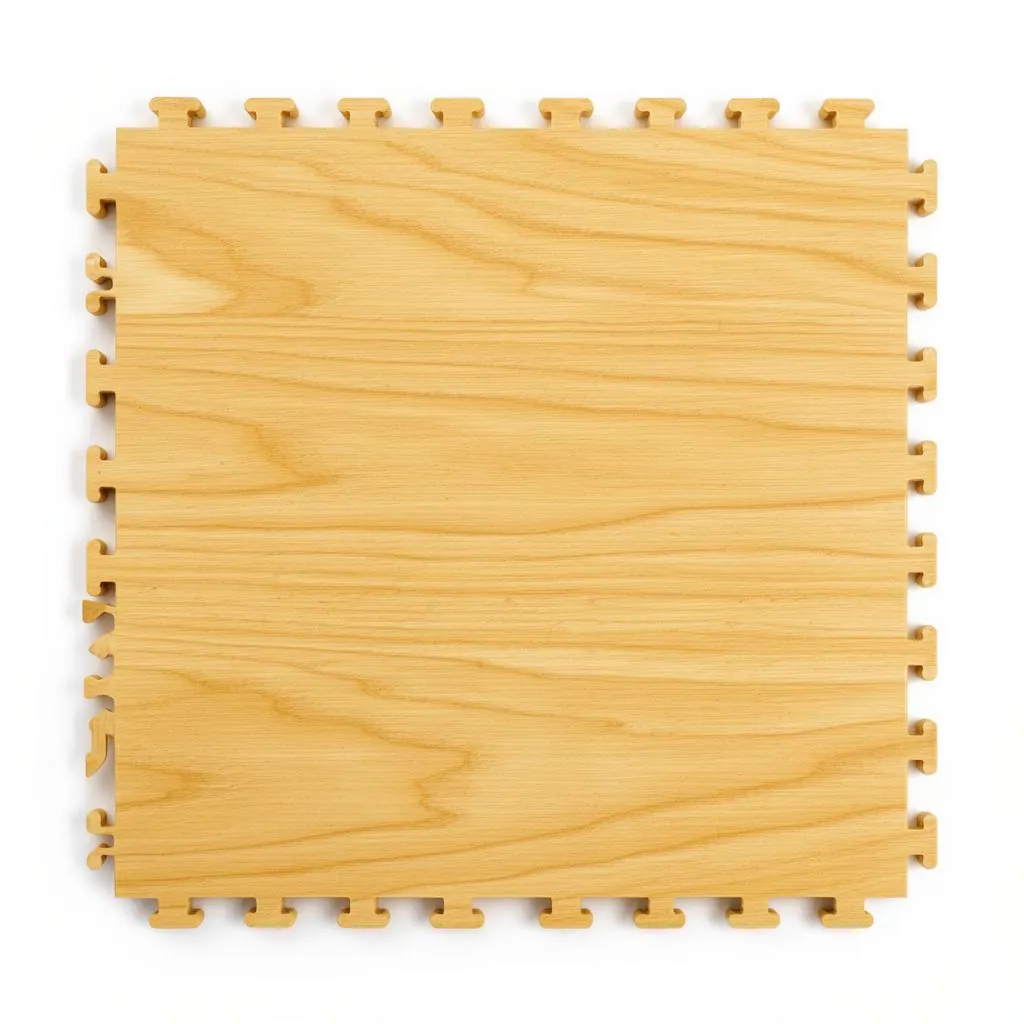
Wood-grain polypropylene with an authentic wood texture, in Classic Maple and Dark Maple. The pick when the court doubles as a rec room.
- Firm cushion level
- 12-year limited warranty
- Indoor Use Certified
GTC Indoor Flex Hardwood
Wood-grain laminated polypropylene in a Maple finish, made for indoor basketball, dance and recreation spaces.
- Firm cushion level
- Rated 40°F to 100°F
- 10-year limited warranty
GTC Indoor Solid Flex
Cushioned polypropylene with a medium cushion level, offered in the full court color range. The quiet choice for basements and home gyms.
- Sound reduction up to 20dB
- 10-year limited warranty
- Indoor Use Certified
Indoor home courts: basements, conditioned garages and home gyms
An in home basketball court usually lives in one of three places: a finished basement, a conditioned garage or a dedicated home gym. What those rooms share is heating and cooling, which is the condition every indoor-only tile line is built for.
Every indoor basketball court residential buyers ask us about starts with the same three questions. Is the room heated and cooled? How high is the ceiling? What is the floor underneath? Answer those and the tile choice for your indoor home basketball court mostly makes itself.
Most basketball courts inside a home share the room with something else. Indoor Solid Flex, with sound reduction of up to 20dB, suits a basement with bedrooms above it or a home gym. The wood-look lines suit a room that is also a rec room or a dance floor.
Unheated garage or outbuilding: use an indoor-and-outdoor line
A garage basketball court in an unheated garage lives through the same freezing winters and hot summers as a driveway. Indoor Flex Hardwood is rated only for 40°F to 100°F, Indoor Solid Flex and Indoor Courtwood publish no temperature range, and indoor tiles are not waterproof at the seams. In a space like that, choose a line built to install indoors or out.
The same applies to a backyard indoor basketball court. For an indoor basketball court in backyard outbuildings such as a detached garage or pool house, the building has to exist first, and a local builder puts it up. We surface an existing building. We do not construct one. If the space will not be heated and cooled year round, plan on one of these lines.
GTC Cushioned Flex Pro
Rated -20°F to 150°F with a 12-year limited warranty. A cushioned tile listed for basketball, volleyball, hockey and training spaces.
View DetailsGTC Driveway Pro
Rated -30°F to 160°F with up to a 15-year limited warranty. Vehicle weight rated, with garage floors among its listed uses.
View DetailsStill deciding between an indoor outdoor basketball court setup and an indoor-only floor? Our guide to the indoor outdoor basketball court decision quotes the temperature and warranty rows from every product page.
Ceiling height and space planning
Ceiling height is the first number to check. Our indoor installation guide recommends a minimum of 16 ft for basketball and 12 ft for pickleball or tennis. Measure to the lowest obstruction, whether that is a beam, a duct, a light or a garage door track.
Floor area comes next. A regulation high school half court is 42 by 50 ft, and a full high school court is 50 by 84 ft. An indoor residential basketball court rarely needs either size, and that is fine. Indoor half court basketball, a key with a free throw line, or a simple shooting lane all play well on tile. Our basketball court dimensions guide covers the line layouts, and the half court basketball page shows how a smaller court comes together.
Leave room around the court too. Walls, posts and doors close to the baseline are a safety issue, and they are easier to plan around on a CAD layout than after the tiles are down.
Indoor basketball court design: lines, logos, colors
Before you hire an indoor basketball court designer, start with the free CAD layout that comes with every quote. It lays the court out on your own measurements, so you can see how it fits the room before anything ships.
From there, the design is yours. Our custom court design service covers Pantone-matched colors, logos, borders and multi-sport line layouts. Extra lines turn an inside basketball court into an indoor multi sport court for volleyball or pickleball, and our multi-sport courts page explains how the lines share one surface. Browse the Pantone color selector to try combinations, or sketch the whole court in the court builder.
Indoor court installation over an existing slab
Indoor basketball court installation starts after the room is finished. Our indoor installation guide calls for a concrete slab that is flat within 1/8 inch per 10 ft, with a moisture barrier in place. If your floor is something other than concrete, describe it in your quote request and the team will tell you what it needs.
The tiles click together with our locking system, with no glue, and the field floats on the slab rather than bonding to it. You can install the court yourself or work with a certified installer who follows the approved CAD layout.
On an indoor basketball court build, the work splits cleanly. Your builder or general contractor owns the indoor court construction: the structure, the slab, heating and cooling. We own the court: the layout, the tiles, the lines and the accessories.
Care is simple. Dry-mop or vacuum daily and damp-mop weekly with a neutral pH cleaner. Skip steam cleaners and wet string mops: indoor tiles are not waterproof at the seams, and heat and saturation can damage them. Our indoor court cleaning guide has the full routine, approved cleaners and a stain chart.
Hardwood look without hardwood maintenance
Plenty of people want the look of the indoor courts basketball players grew up on. To be clear, we do not offer hardwood basketball court installation, and site-built hardwood basketball floors are a separate trade. What we offer is a wood-look tile that gives you that classic court appearance in a modular system.
The Indoor Courtwood tile has an authentic wood texture in Classic Maple or Dark Maple, and the Indoor Flex Hardwood tile comes in Maple. Both are easy to maintain, and a damaged tile can be replaced on its own. For wood-look tiles, our cleaning guide lists diluted Murphy Oil Soap as an approved cleaner, and rules out wax, polish and abrasive pads.
If a quiet, cushioned floor matters more than the wood look, the Indoor Solid Flex tile is the better fit.
Indoor courts for schools, camps and facilities
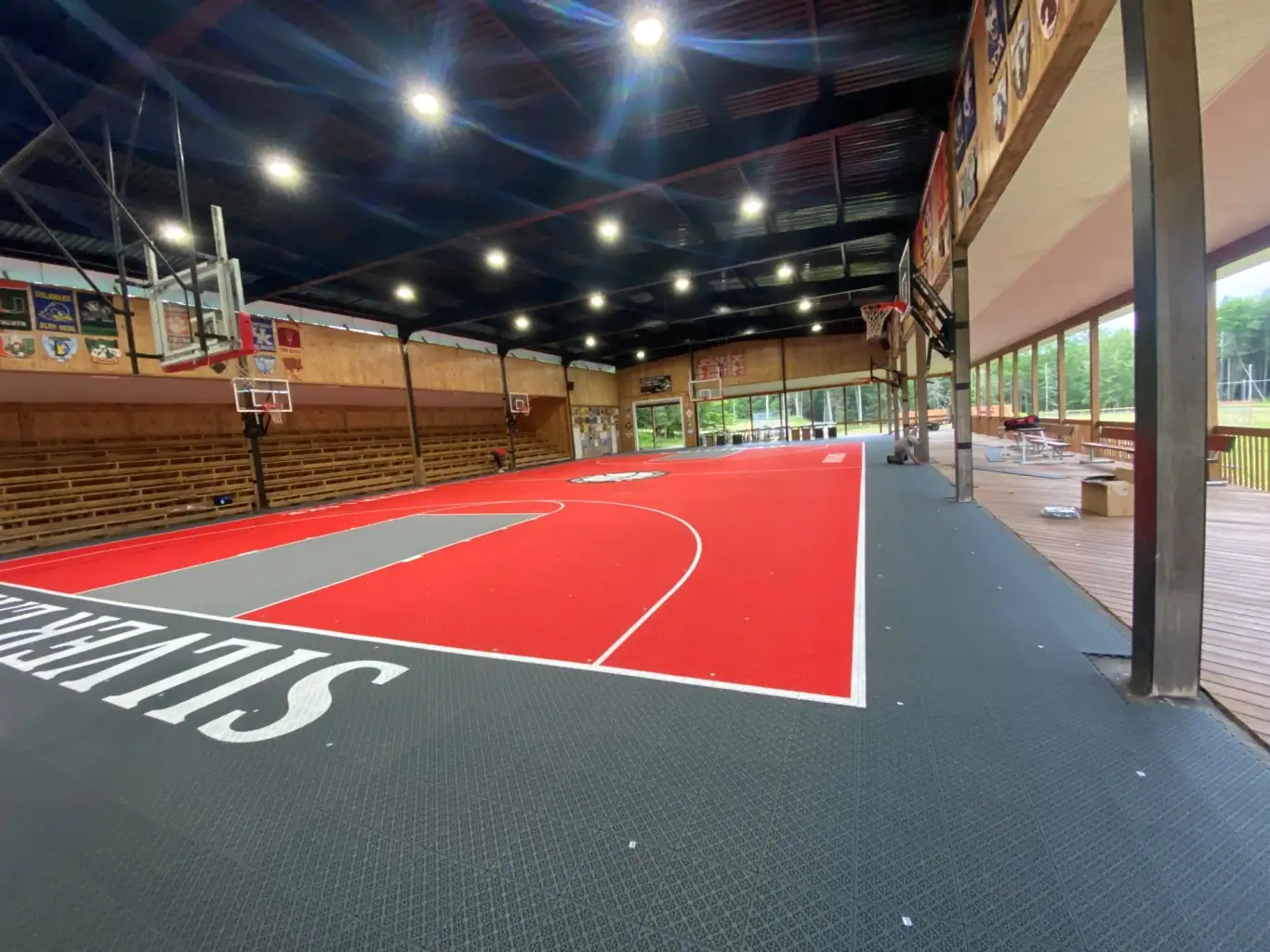
The same approach scales up. An indoor camp facility in Swan Lake, NY runs multi-sport play on an 80 by 120 ft tile floor, one of the projects in our gallery.
For a school gymnasium or training facility, ProPlay Elite is FIBA approved, rated -30°F to 150°F and carries up to a 15-year limited warranty, so one line can serve both an indoor court and an outdoor one. See our commercial basketball court options for schools, camps and recreation centers.
Indoor Basketball Court Questions
- How much ceiling height does an indoor basketball court need?
- The indoor installation guide in our court builder recommends a minimum of 16 ft of ceiling height for basketball, and 12 ft for pickleball or tennis. Measure to the lowest thing overhead, such as a beam, duct, light fixture or garage door track, not only to the ceiling itself. A lower room can still work well for shooting and ball handling, so tell us the height when you request a layout. Request a free CAD layout
- Can I put an indoor basketball court in my garage?
- Yes, and the right tile depends on whether the garage is heated and cooled. In a conditioned garage, any indoor line works. In an unheated garage, use an indoor-and-outdoor line such as Cushioned Flex Pro or Driveway Pro, because Indoor Flex Hardwood is rated only for 40°F to 100°F, Indoor Solid Flex and Indoor Courtwood publish no temperature range, and indoor tiles are not waterproof at the seams. Compare indoor and outdoor lines
- What drives the cost of an indoor basketball court?
- The main drivers are the tile line, the square footage you cover, the court lines, colors and logos you add, and any slab work the room needs first, such as leveling or a moisture barrier. Installing it yourself or hiring a certified installer, and accessories like the hoop system, also move the number. We do not publish a price range because every room is different, so every quote is built from your measurements and comes with a free CAD layout. Read more on indoor basketball court cost drivers
- Can indoor court tiles go over concrete?
- Yes. A concrete slab is the standard base for an indoor court. Our indoor installation guide calls for a slab that is flat within 1/8 inch per 10 ft, with a moisture barrier in place. The tiles snap together without adhesive and the field floats on the slab; only the perimeter edge tiles are anchored. See the installation overview
- Do you build the room for an indoor basketball court?
- No. Game Tile Courts supplies modular court tiles, court kits and accessories and works with certified installers. We do not frame buildings, pour concrete or paint courts. If you are comparing indoor basketball court builders, the building contractor handles the structure, slab, heating and cooling, and we lay out the court and supply the playing surface once the room is ready. Find a certified installer
Ready to Plan Your Indoor Court?
Send us the room size, the ceiling height and what is under the floor. We will send back a free, no-obligation CAD layout with a tile recommendation for your space.
Go Deeper
- Buying GuideIndoor Outdoor Basketball Court Tiles: Choosing the Right LinePlanning an indoor outdoor basketball court? Every Game Tile Courts line is either indoor-only or built for indoor and outdoor use. Here is why the split exists, with the temperature and warranty rows from each product page, and a short set of questions that settles the choice.8 min read
- Cost GuideHow Much Does a Backyard Basketball Court Cost?What drives backyard basketball court cost: base prep, modular tiles, half court or full court size, installation and accessories, and how to get one all-in number for your yard.16 min read